Call us now:
from the past to the present
THE LOCAL STORY
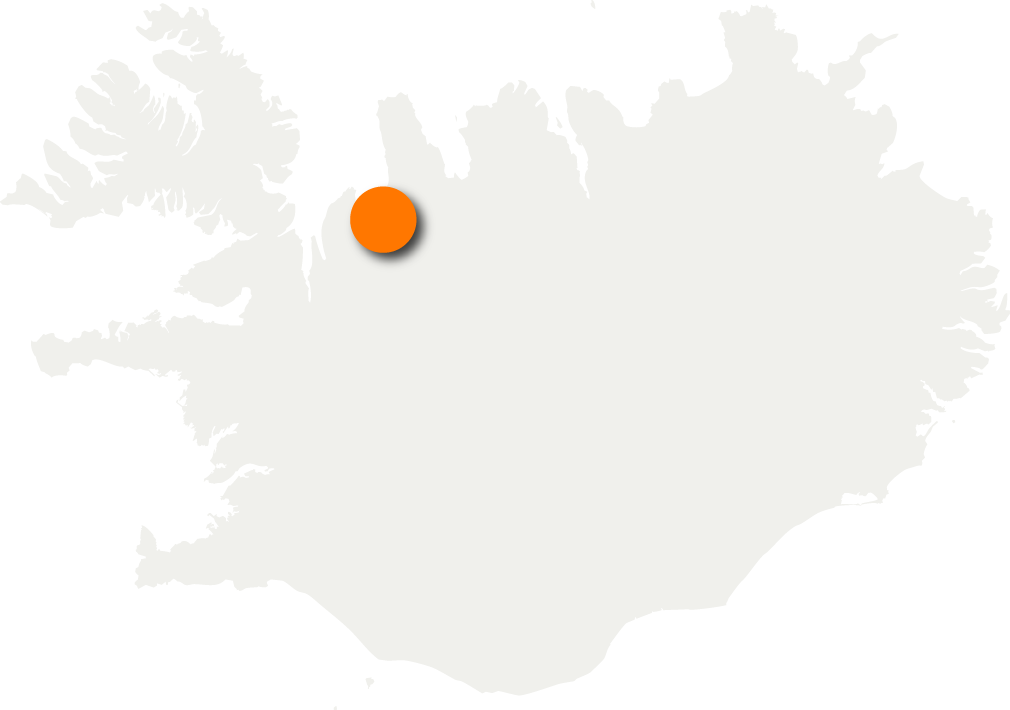
Vatnsdalur’s history traces back to the early days of Iceland’s settlement, when Ingimundur gamli (the Old), a chieftain from Sogn in Norway, arrived in the 9th century. As told in Vatnsdæla saga, likely written sometime in the 13th century, Ingimundur sought out the valley’s fertile land and flowing waters, making his home at Hof. Over time, his descendants spread through the valley, founding farms that still stand today.
Settlement and the icelandic sagas
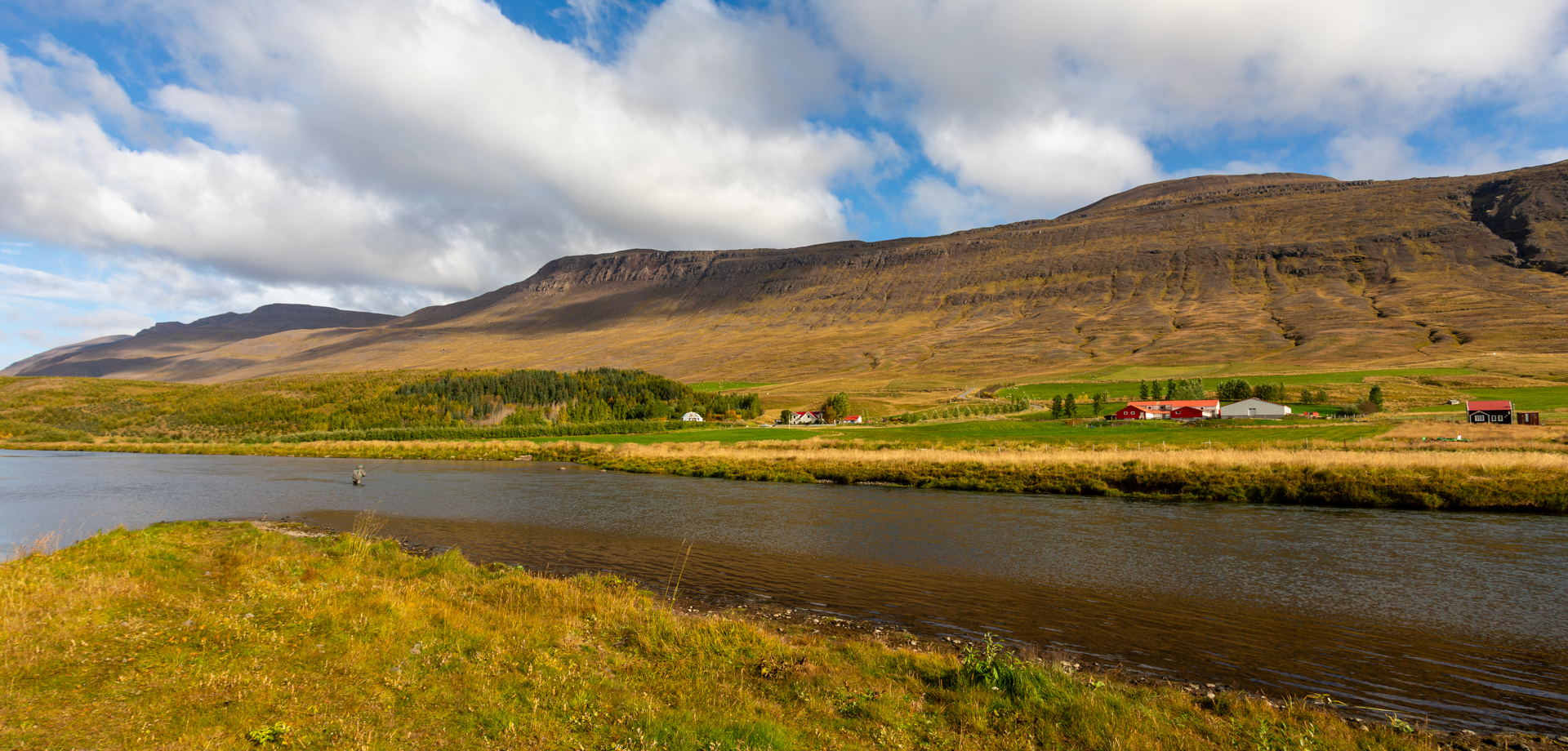
Hof farm Vatnsdalur valley.
Hof remained the center of the family’s influence, but many other farms emerged as Ingimundur’s sons, daughters and grandsons settled throughout the valley. Þingeyrar became an important assembly site and, later, home to Iceland’s first monastery. Kornsá, known from the saga and later history, was another key settlement. Other notable farms included Ásbjarnarnes, Hvammur, Forsæludalur, Saurbær, and Dalsmynni, all tied to the saga’s events and characters.
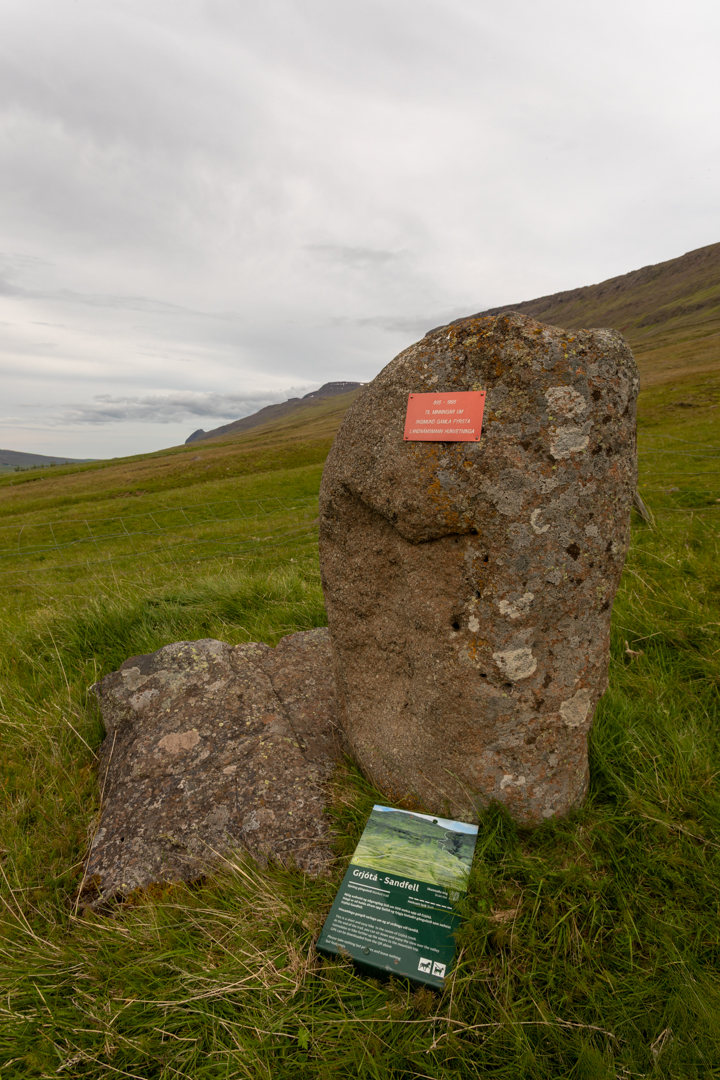
Memorial stone to Ingimundr at Hof.
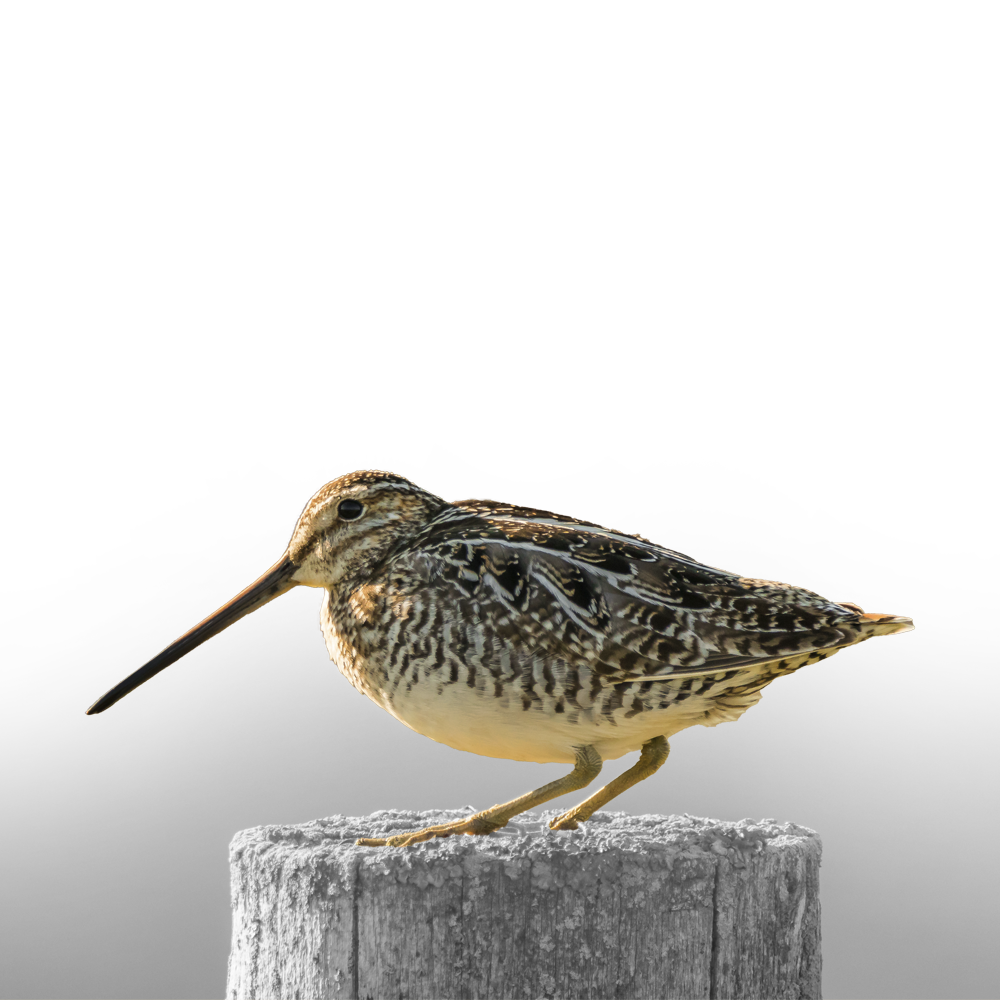
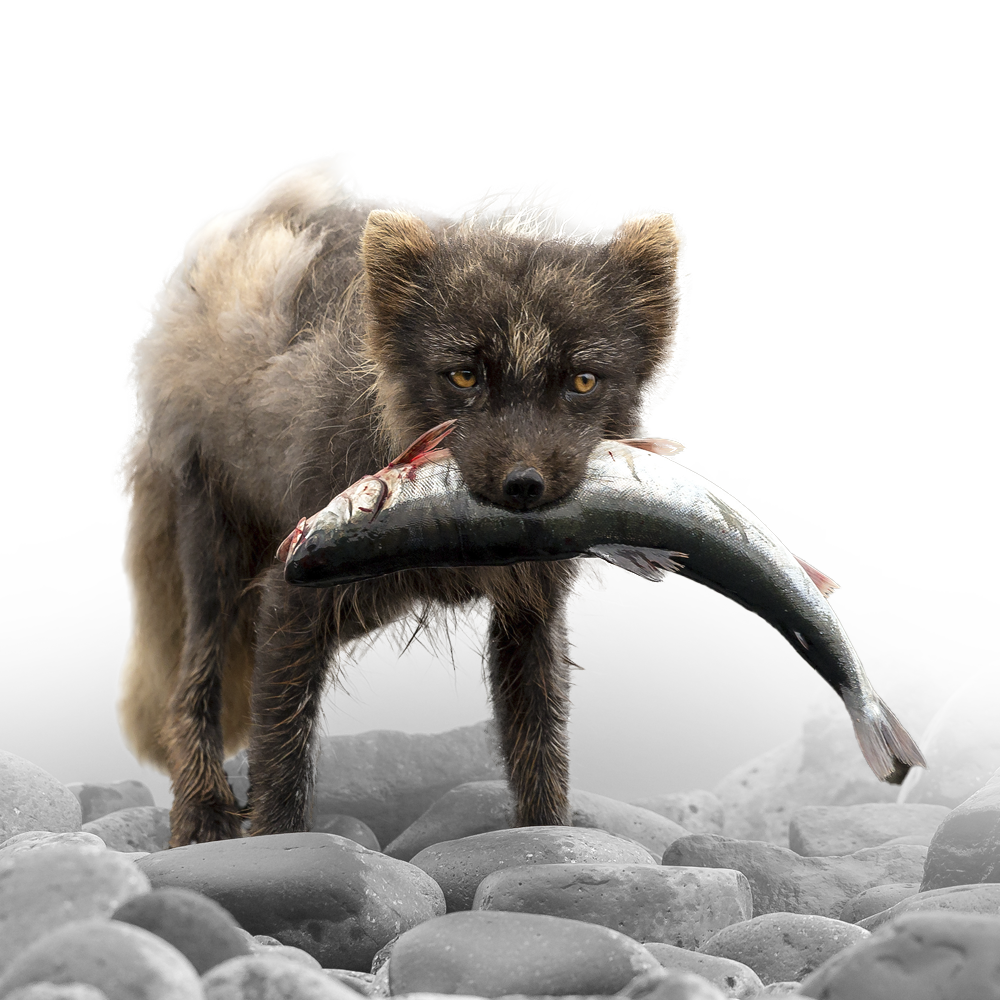
The Night Grettir Took on Glámur
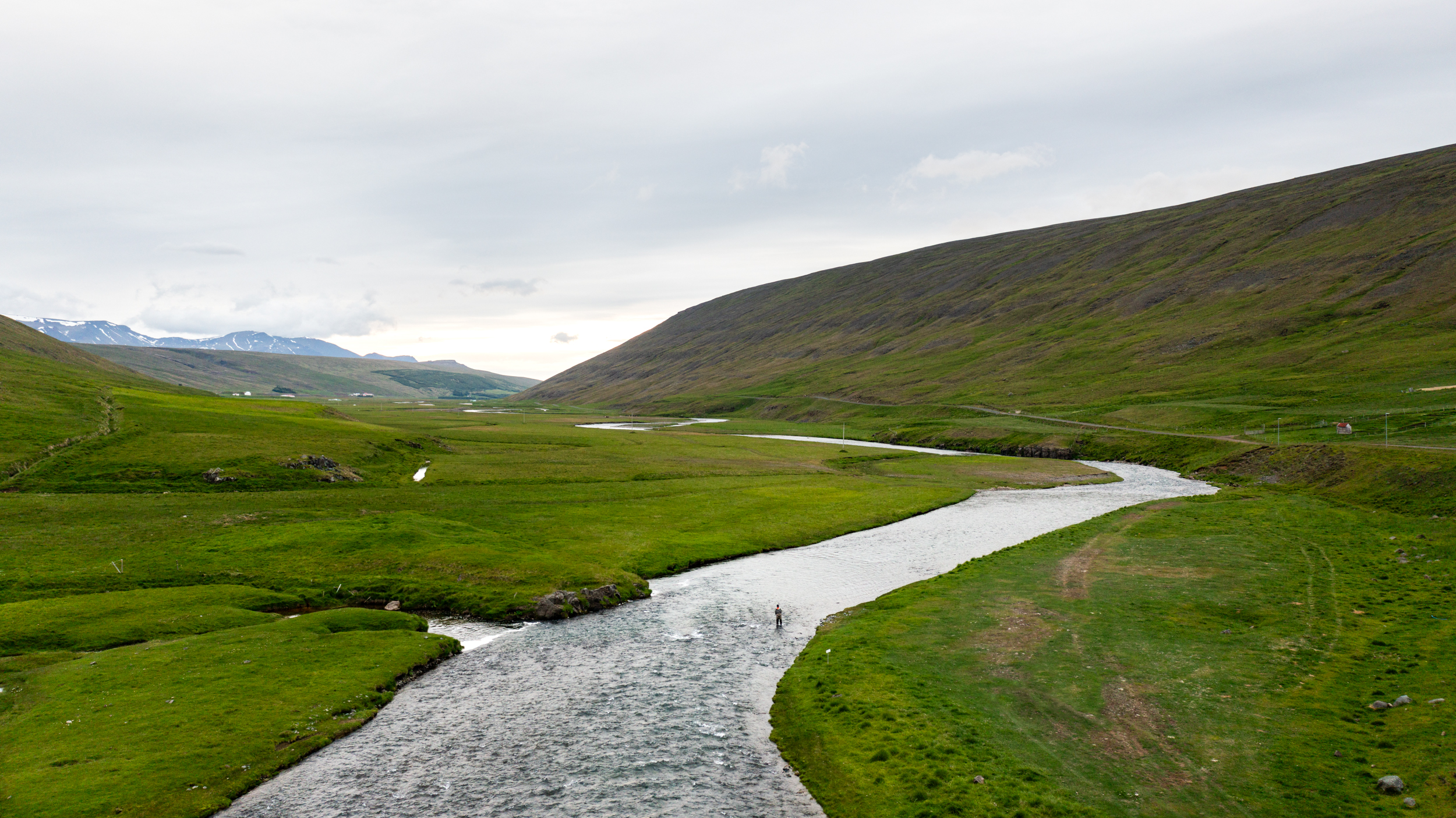
Þórhallastaðahylur (Grettishylur) Pool, Forsæludalur valley.
Grettir Ásmundarson was a warrior known for his strength and defiance, but one of his greatest battles took place in Vatnsdalur. Called upon to face a terrifying force haunting the valley, he stepped into the darkness, unaware that the fight would change his fate forever.
The threat was Glámur, a shepherd who had vanished in a winter storm. When his body was found, it was unnaturally swollen, his face twisted in horror. After burial, he rose again, a restless spirit who haunted the valley and filled it with fear.
Their battle took place on the west bank of the renowned Þórhallastaðahylur, the fishing pool named after the former Þórhallastaðir farm. The fight was relentless, with Grettir and Glámur locked in a fierce struggle that would seal both their fates. Grettir finally overpowered Glámur, but as he looked into the ghost’s glowing eyes, he was cursed and doomed to a life of fear and misfortune. Though victorious, he left Vatnsdalur forever changed, his path leading to exile and downfall.
The valley still holds the echoes of that legendary night, where history and saga meet in the shifting shadows of the land.
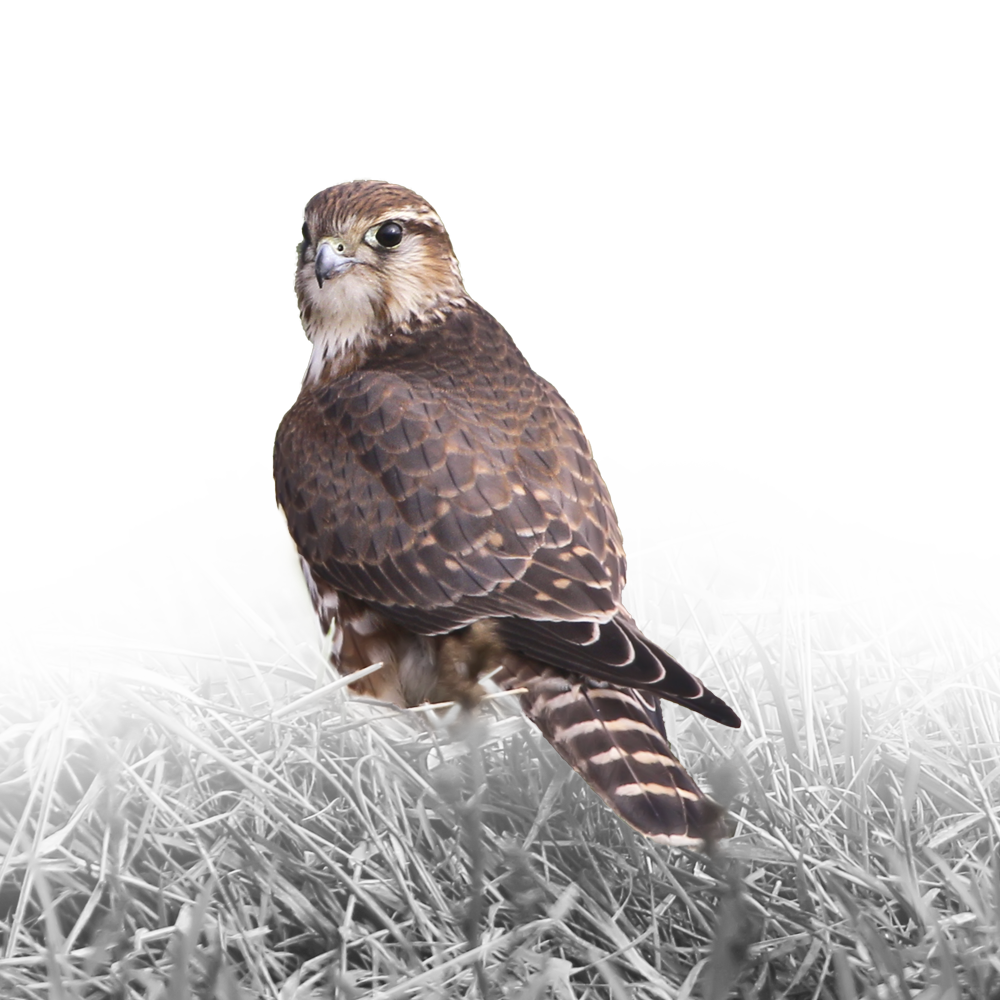
The Haunting Tale of Agnes and Friðrik
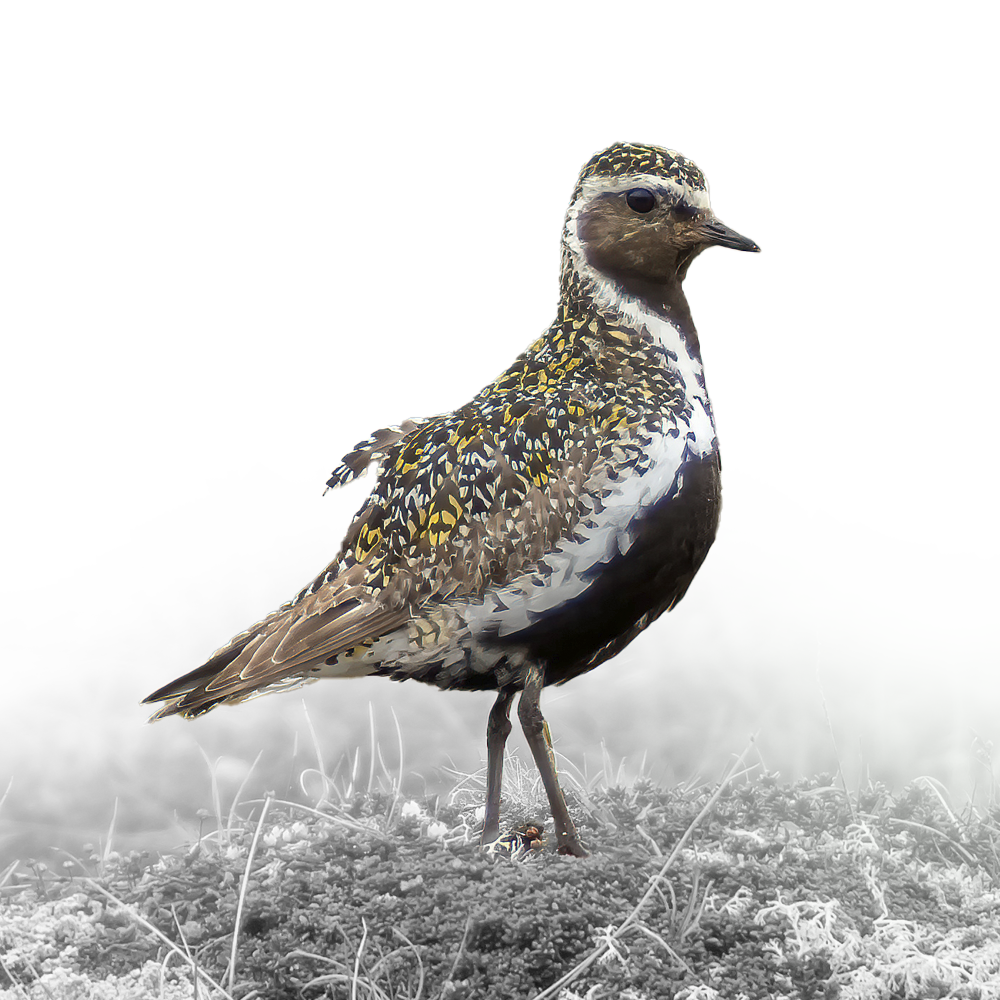
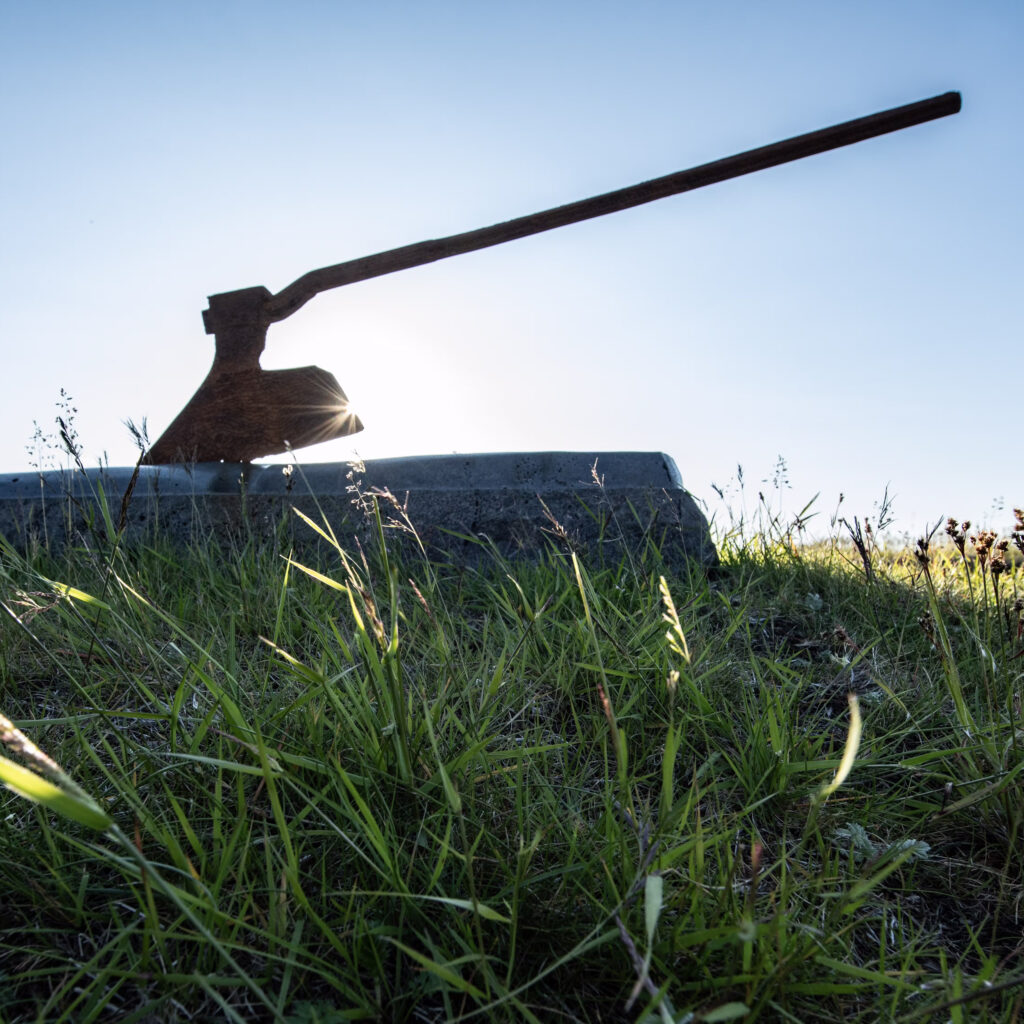
Þrístapar – memorial site of Agnes and Friðrik’s execution 1830. Photo: Visit North Iceland.
In 1828, a crime that shook Iceland took place near Vatnsdalur. Agnes Magnúsdóttir and Friðrik Sigurðsson were convicted of murdering Natan Ketilsson, a healer and trader, along with his companion Pétur Jónsson, at Illugastaðir on the Vatnsnes Peninsula.
Natan was a gifted healer but also a controversial figure—charismatic yet unpredictable, admired by some but resented by others. Agnes worked as his housemaid, tending to the household and assisting in his work, while Friðrik, a farmer’s son, was romantically involved with Sigríður Guðmundsdóttir, a young servant at Illugastaðir. Tensions escalated, leading to a brutal attack on the night of March 13, 1828, when the two men were killed and their bodies set on fire in an attempt to cover up the crime.
Though the events and motives remain debated, with some seeing Agnes and Friðrik as cold-blooded killers and others viewing Agnes as a victim of circumstance, the true nature of what happened at Illugastaðir remains shrouded in uncertainty.
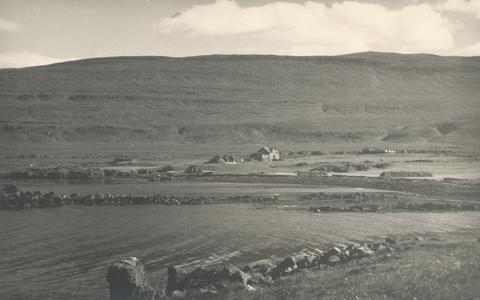
Illugastaðir Vatnsnes, North West Iceland. Photo: District Archives of East Húnavatnssýsla.
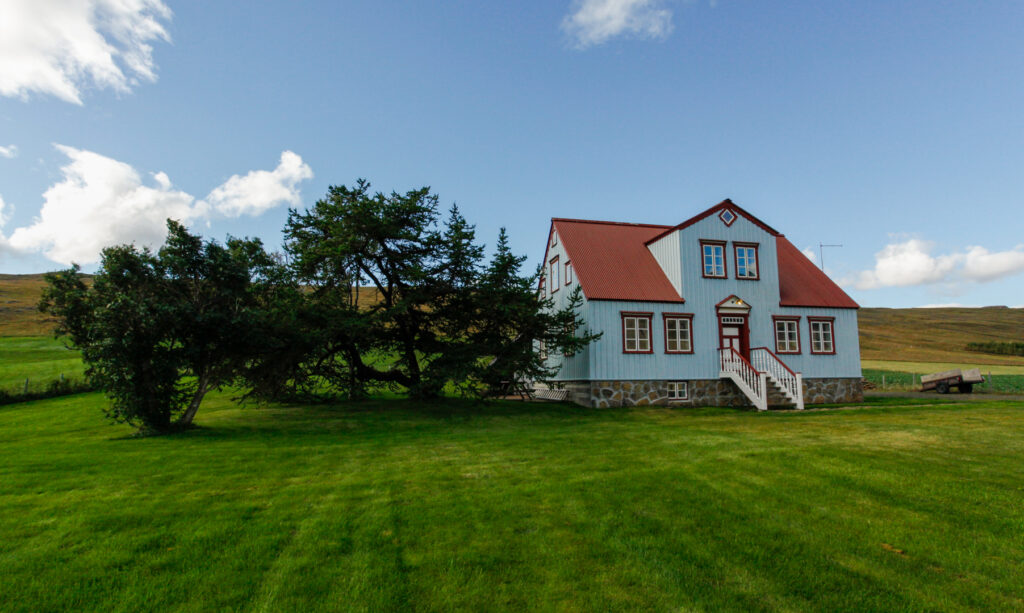
Kornsá farm, Vatnsdalur valley.
Following the trial of Agnes and Friðrik, overseen by district commissioner Björn Blöndal, both were sentenced to death. Agnes spent her final months at Kornsá, a farm in Vatnsdalur, before she and Friðrik were executed by beheading at Þrístapar, a low rise at the southern edge of Vatnsdalur, on January 12, 1830. This was the last execution in Iceland, marking a turning point in the nation’s history.
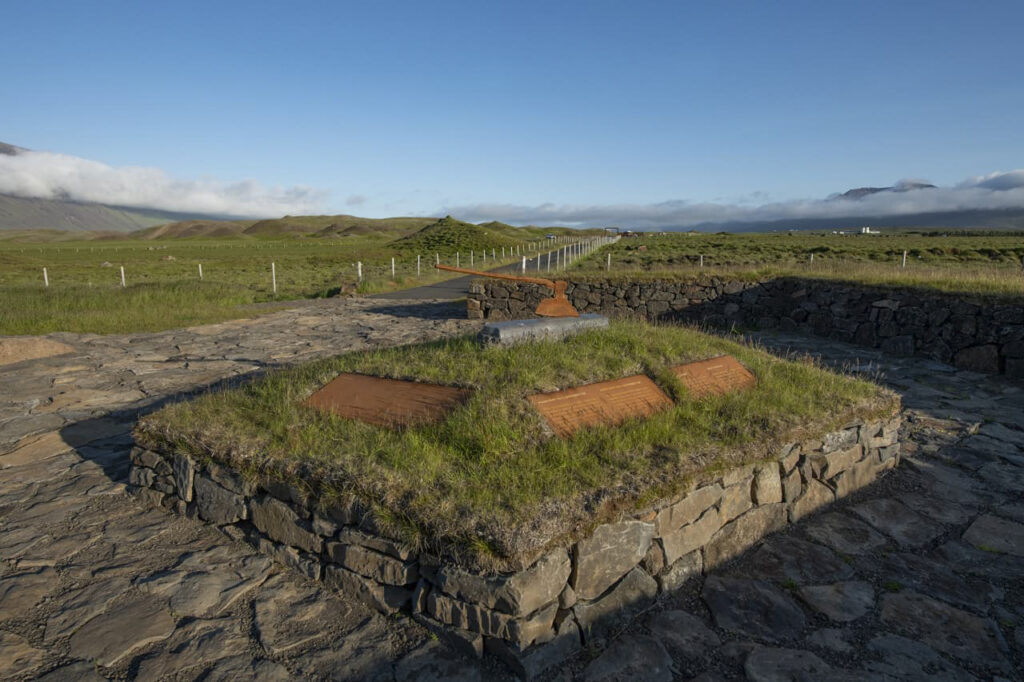
Þrístapar – memorial site of Agnes and Friðrik’s execution 1830. Photo: Visit North Iceland.
Their story has inspired many writers, leading to numerous books and even a film adaptation. It remains one of Iceland’s most haunting tales, forever tied to the landscapes of Vatnsdalur.
Hear the Voices of Vatnsdalur

Click the icon for the audio guide.
A Valley Shaped by Landslides
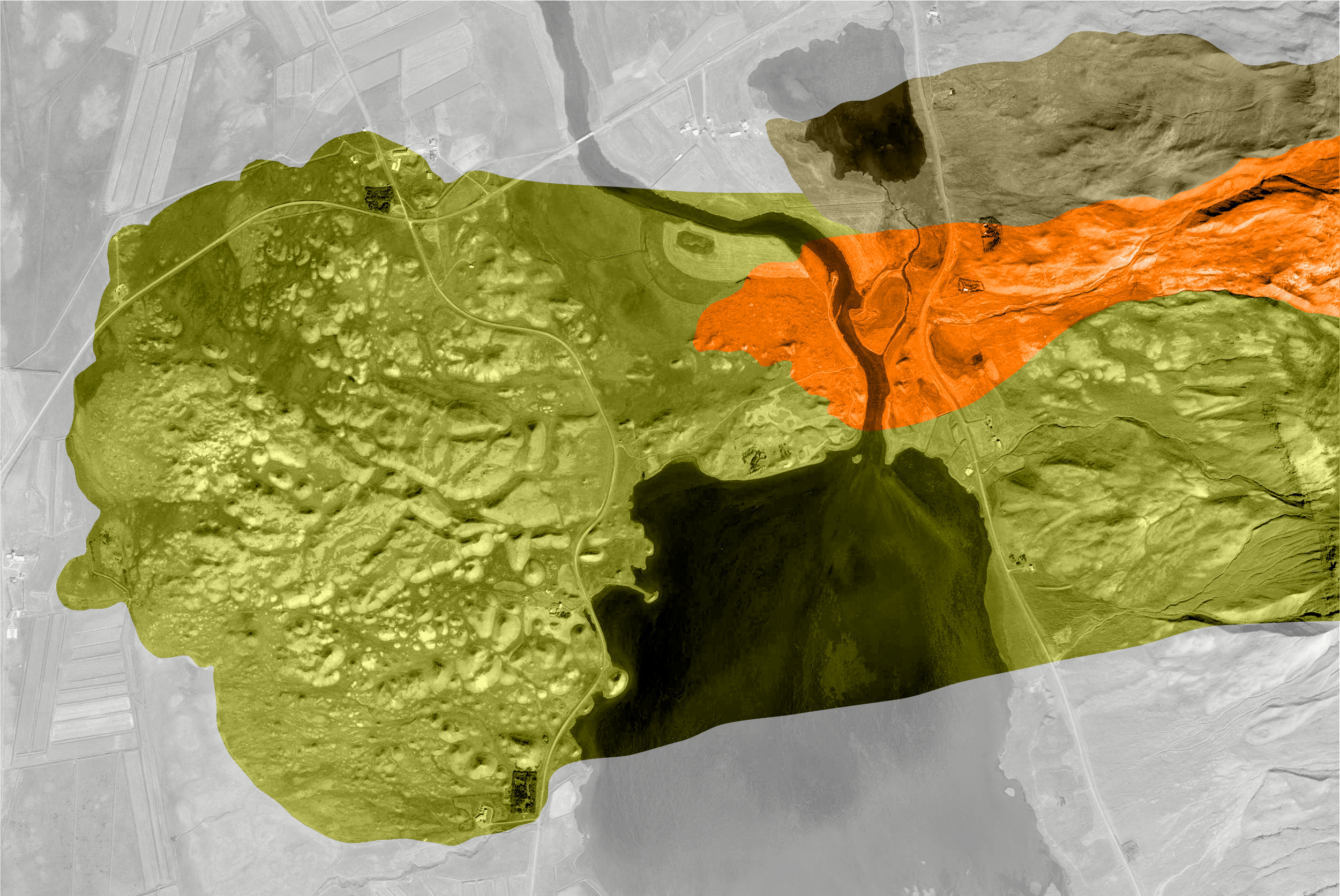

Vatnsdalur has long been sculpted by the forces of nature, and among the most dramatic events in its history are the great landslides that reshaped the valley floor. The scars they left behind tell stories of both destruction and transformation, with their legacy still visible in the landscape today.
The Skíðastaðir Landslide (1545)
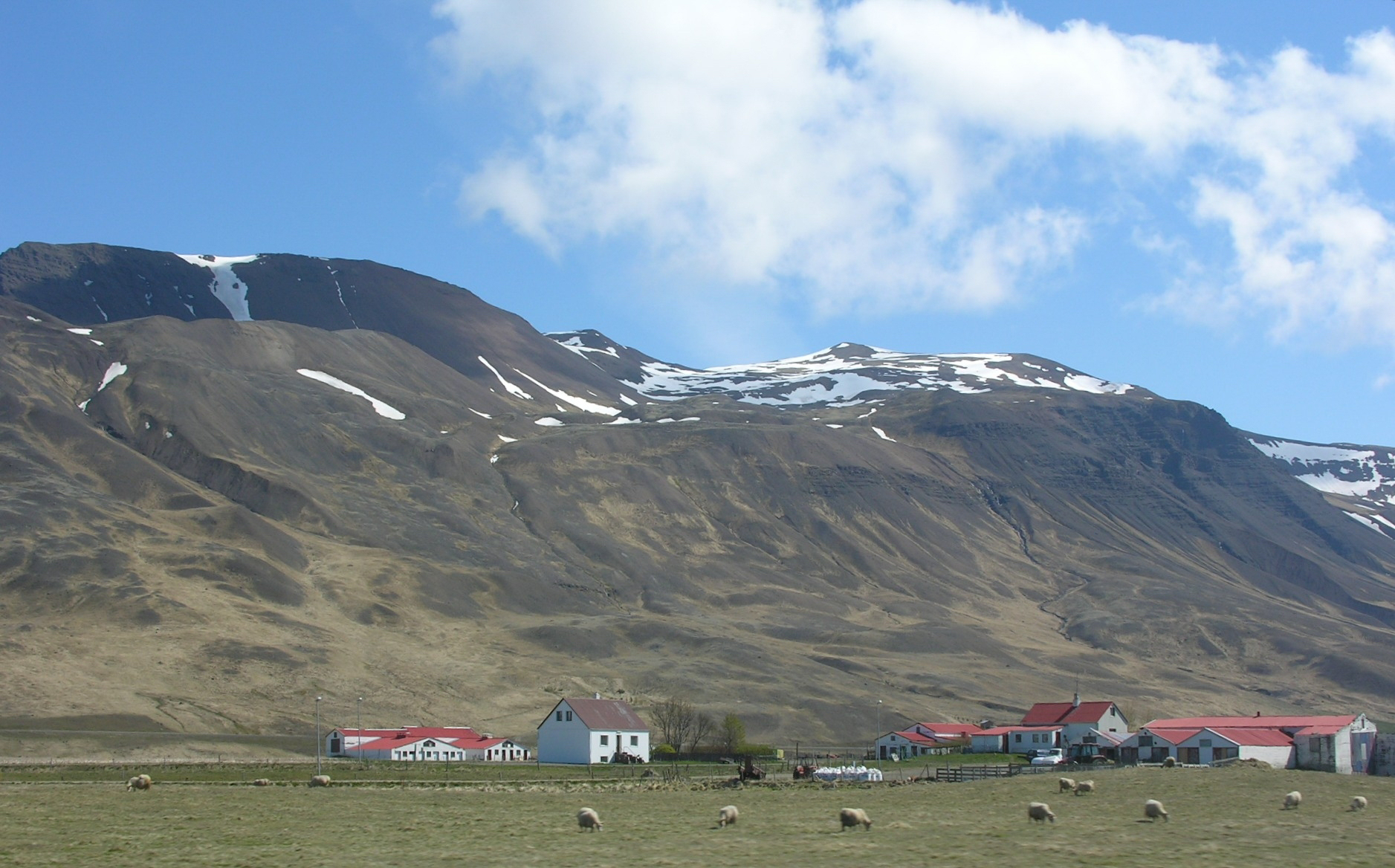
Photo: Hansueli Krapf from Wikimedia Commons.
In the late summer of 1545, a massive landslide, Skíðastaðaskriða, thundered down the mountainside in the dead of night, burying the farm Skíðastaðir beneath it. Fourteen lives were lost in an instant. The Skarðsannáll, a historical chronicle, describes the aftermath:
“A great landslide fell in Vatnsdal one night in late summer, during the hay-cutting season, and buried an entire farm called Skíðastaðir. Fourteen people perished beneath it. The farm was owned by a man named Sæmundur, a man of considerable means. In the aftermath of the enormous landslide, nothing was found except for Sæmundur’s right hand, which was identified because of a silver ring on his finger. People at the time took this as a sign that his hand should receive a Christian burial in recognition of his almsgiving, as he had always used it to help the poor.”
The landslide spread over half a kilometre at the foot of the mountain, burying more than 50 hectares (125 acres) under a thick layer of earth and rock. It is believed to have originated 600 meters above the valley floor, moving with incredible force.
The Bjarnastaðir Landslide (1720)
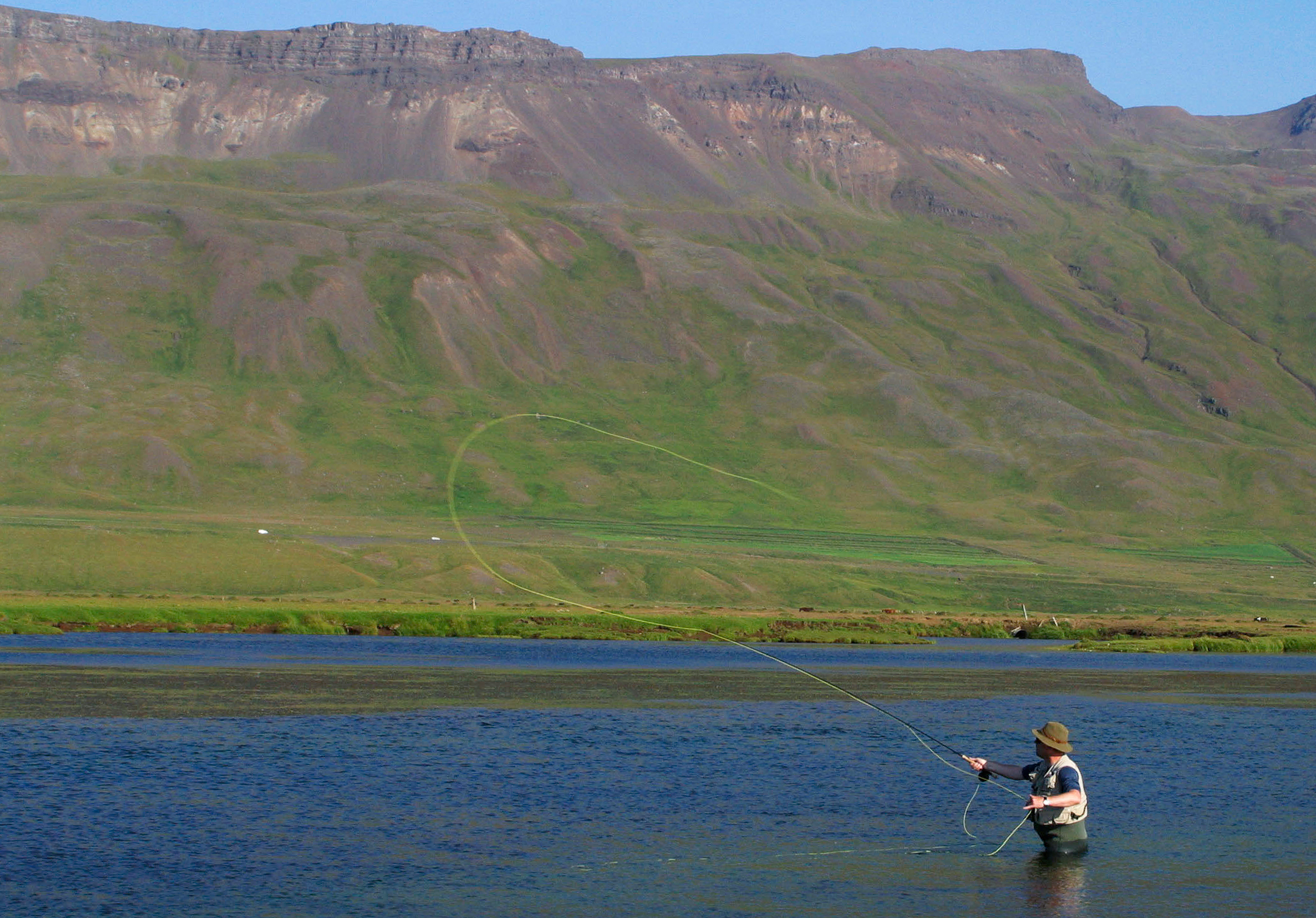
Photo: Einar Falur Ingólfsson.
Nearly two centuries later, another massive landslide, Bjarnastaðaskriða, struck just south of Skíðastaðaskriða. This time, it swallowed Bjarnastaðir farm, leaving nothing behind but devastation. The landslide dammed the Vatnsdalsá River, forming the lake Flóðið, which remains a defining feature of the valley. On its western shore now stands Flóðvangur Lodge, a quiet witness to the valley’s history. Accounts vary, but between five and seven people are believed to have perished.
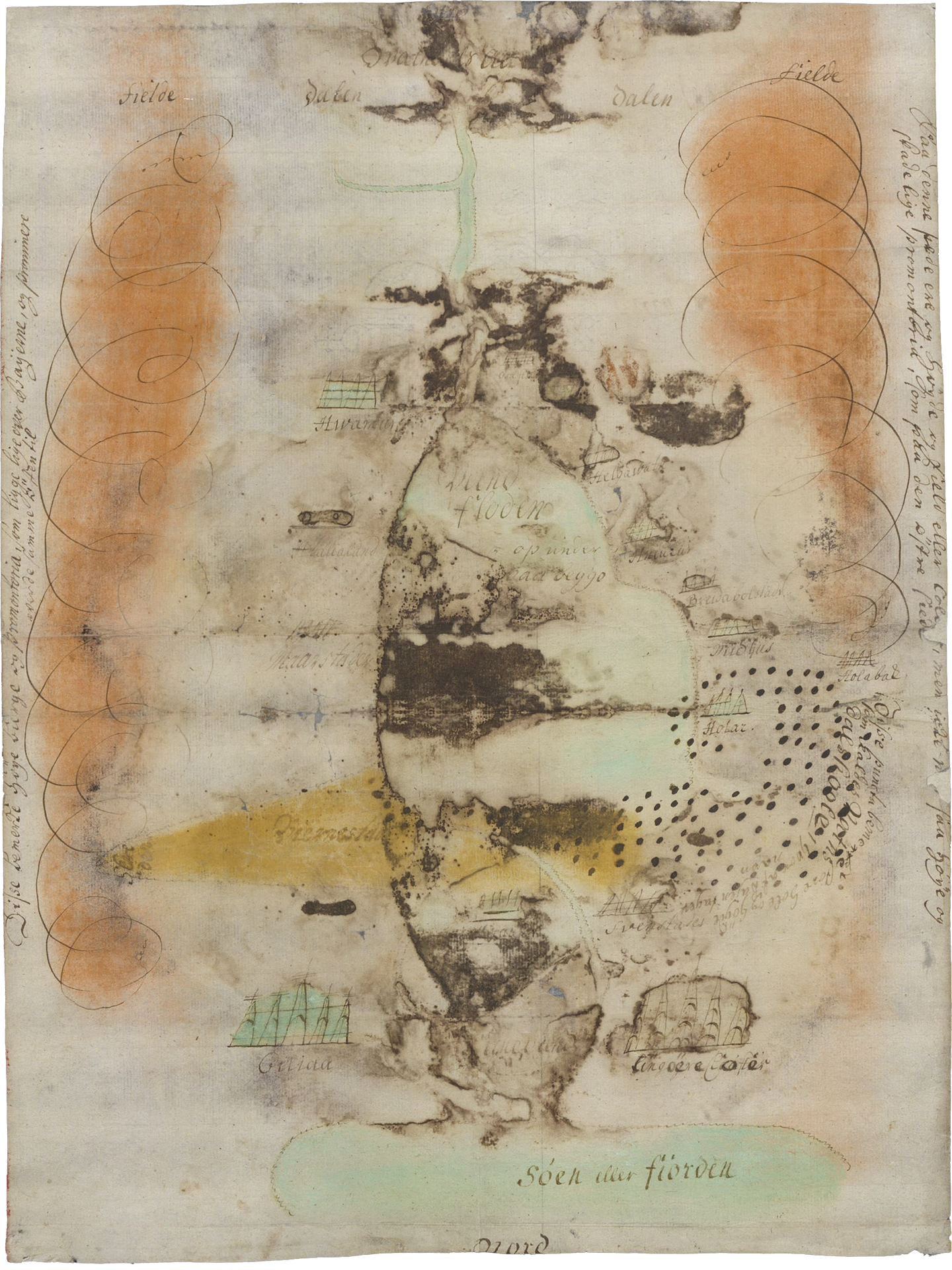
A sketch of the landslide in Vatnsdalur in Húnavatnssýsla on the night of October 8, 1720, or rather its consequences. The sketch was stapled into the letter book of Peter Raben, the parish clerk, for the year 1722 and is damaged by moisture like the letter book itself. This is, as far as can be seen, the sketch that Jóhann Gottrup, the commissioner and sheriff of Húnavatnssýsla, sent to the county clerk Raben in a letter on September 22, 1721.
He says that Gottrup made it himself out of weakness, “of idiotismo and inhabilitation“.
National Archives of Iceland
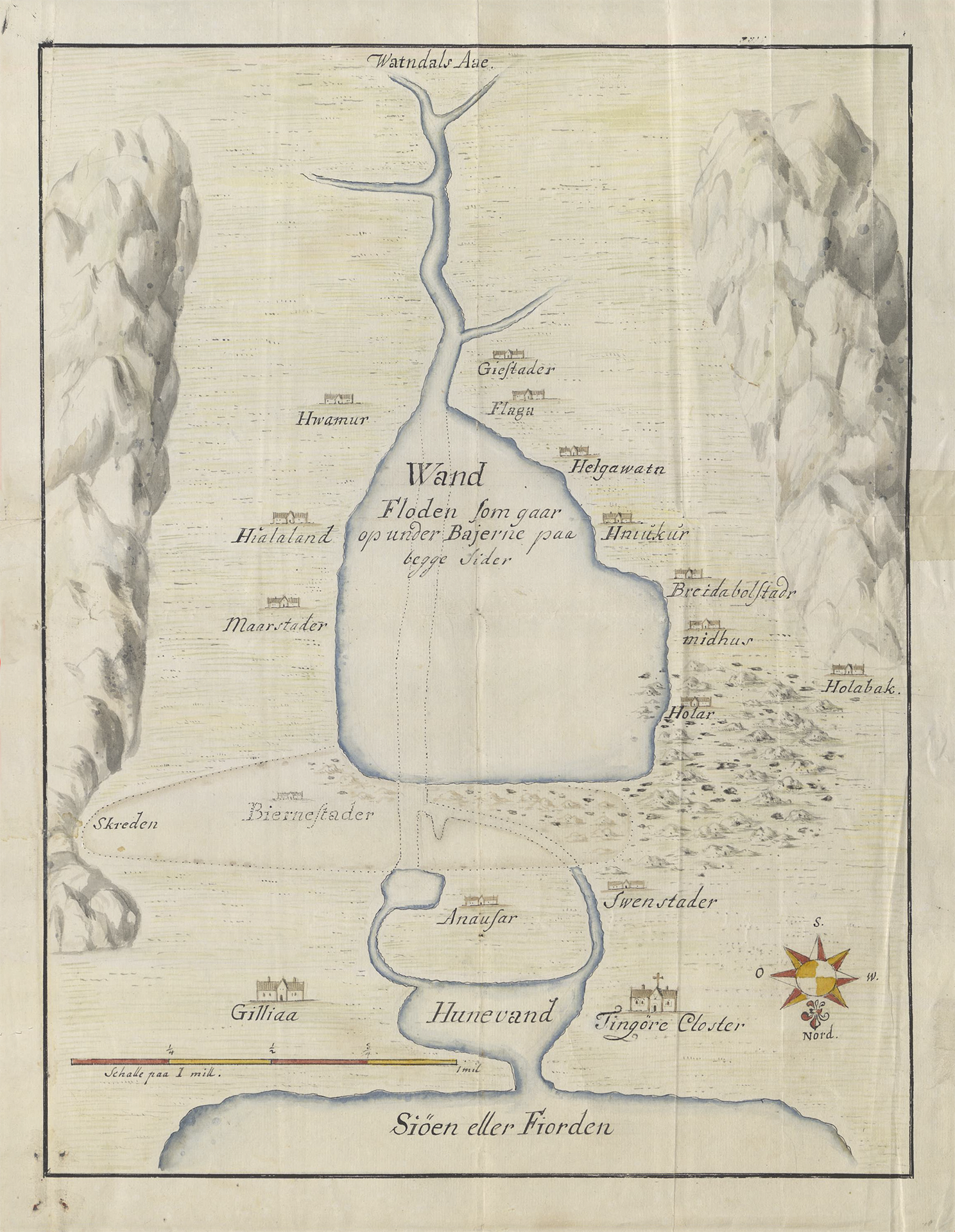
An improved sketch of the landslide in Vatnsdalur in Húnavatnssýsla on the night of 8 October 1720, or rather its consequences. This sketch was among the documents enclosed with a letter to the king from Peter Raben on 7 January 1722. According to the conclusion of the letter, Raben had this sketch made, or probably rather made it himself. In the letter, he says that he has added to the documents a map that is more accurate than the poor map that was sent to him from Iceland. Raben was at this time working on a map of Iceland based on available sources and the limited observations that he was able to make himself during his trip to the country in 1720. Among the documents enclosed with Raben’s letter is, in addition to the map, a detailed parliamentary testimony about the landslide and its consequences taken at Sveinsstaðir on 10–13 June 1721.
National Archives of Iceland
Vatnsdalshólar – Shaped by Nature, Countless in Number
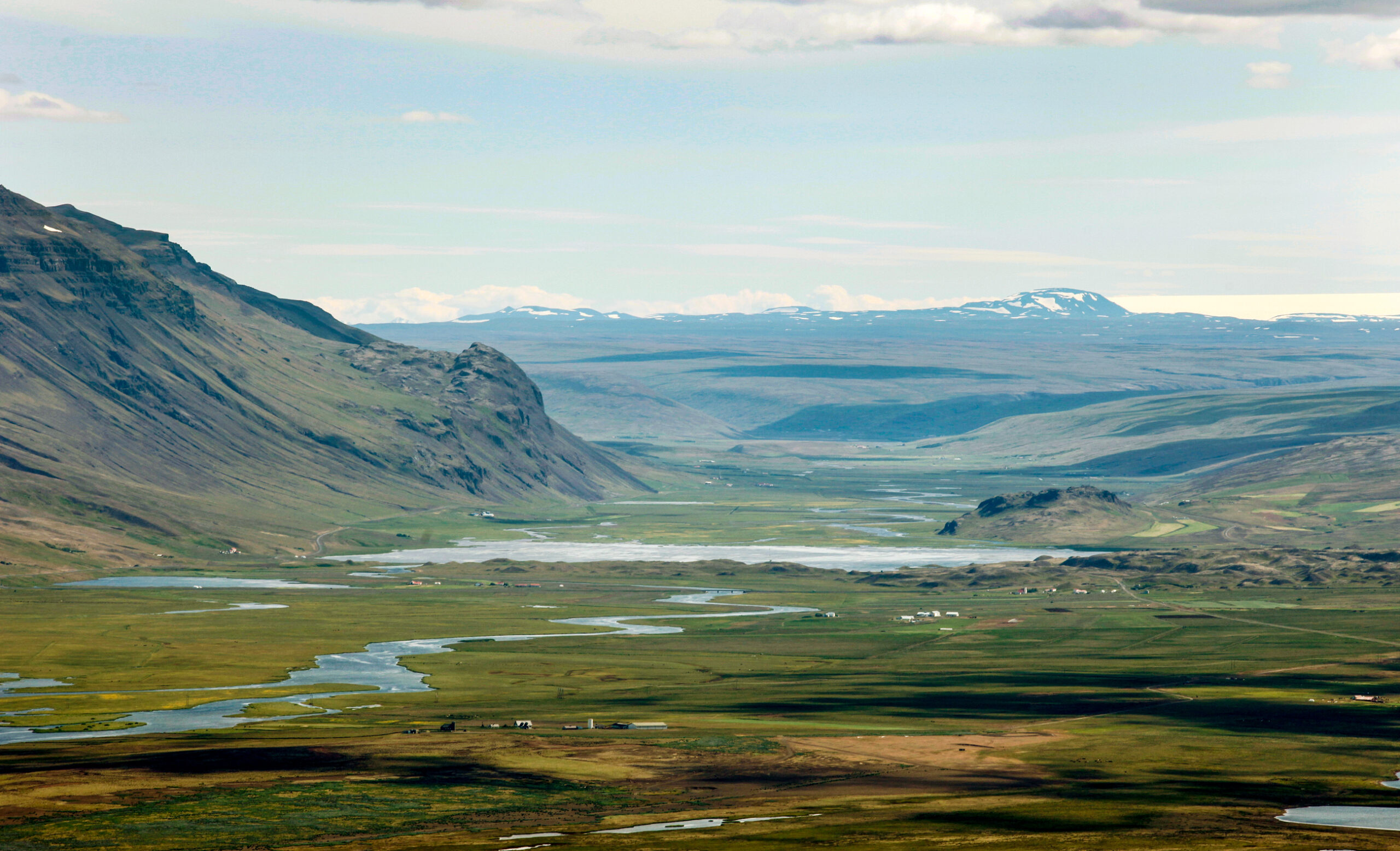
Photo: Einar Falur Ingólfsson.
These were not the first landslides to shape the valley. Around 7,000 years ago, an even greater collapse sent rock and earth cascading down, creating one of Iceland’s most remarkable landscapes: Vatnsdalshólar. This vast stretch of countless hills and mounds, scattered across the lower valley, was formed when a massive slope failure reshaped the terrain. Today, Vatnsdalshólar is considered one of Iceland’s three “innumerable” phenomena, alongside the lakes of Arnarvatnsheiði and the islands of Breiðafjörður.
The landslides of Vatnsdalur are reminders of the valley’s ever-changing nature. Though they brought devastation in their time, they also shaped the river, the lakes, and the rolling landscape that define Vatnsdalur today.
The Birth of Organized Sport Fishing
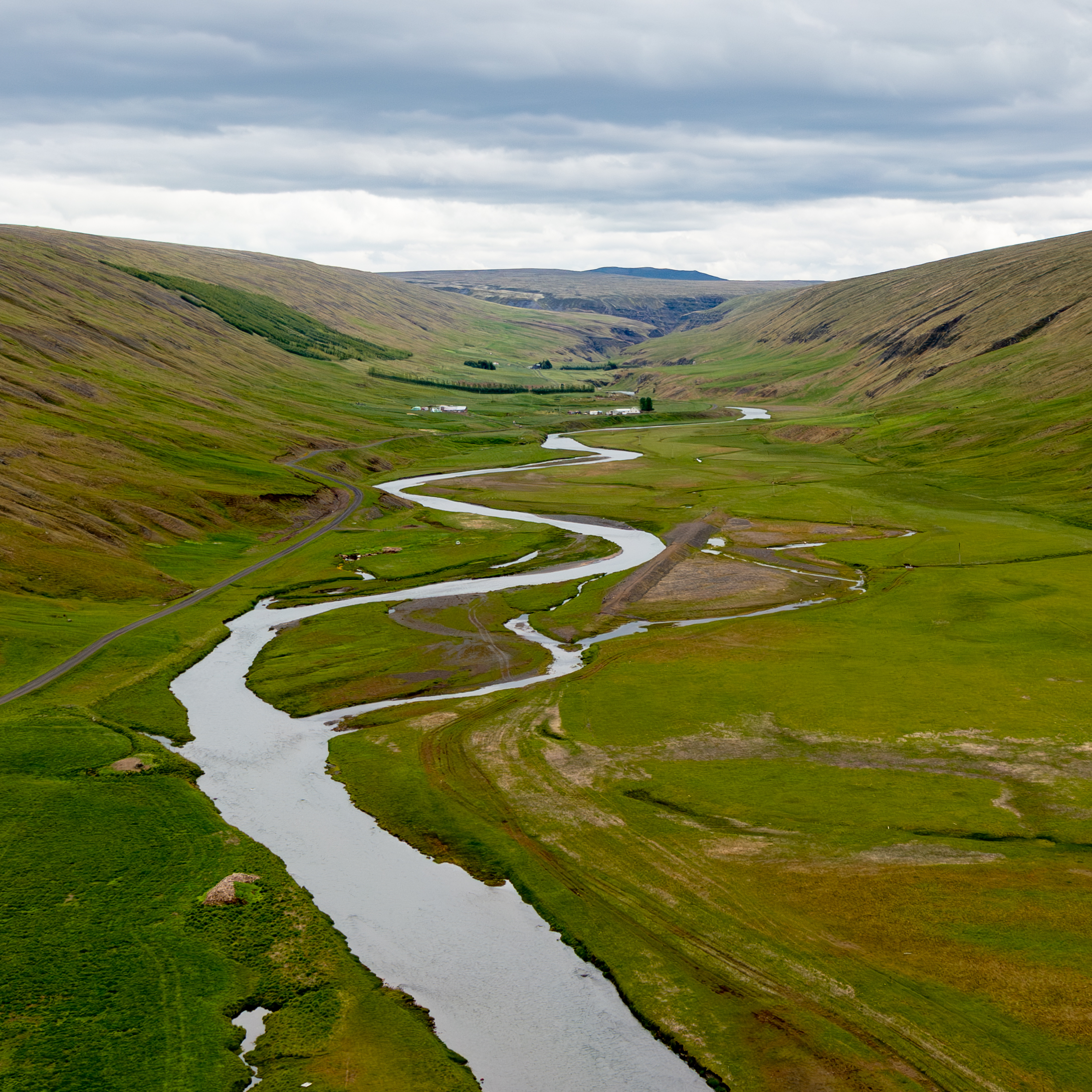
The 1930s marked a turning point. Net fishing was prohibited, and the river was leased to sport fishermen. In 1936, the Vatnsdalsá Fishing Association was founded, reflecting a broader movement across Iceland. As sport fishing gained popularity, landowners recognized its advantages over net fishing. The association played a key role in ensuring the river’s sustainable management and the preservation of its salmon stocks.
British Pioneers Bring a New Way of Thinking
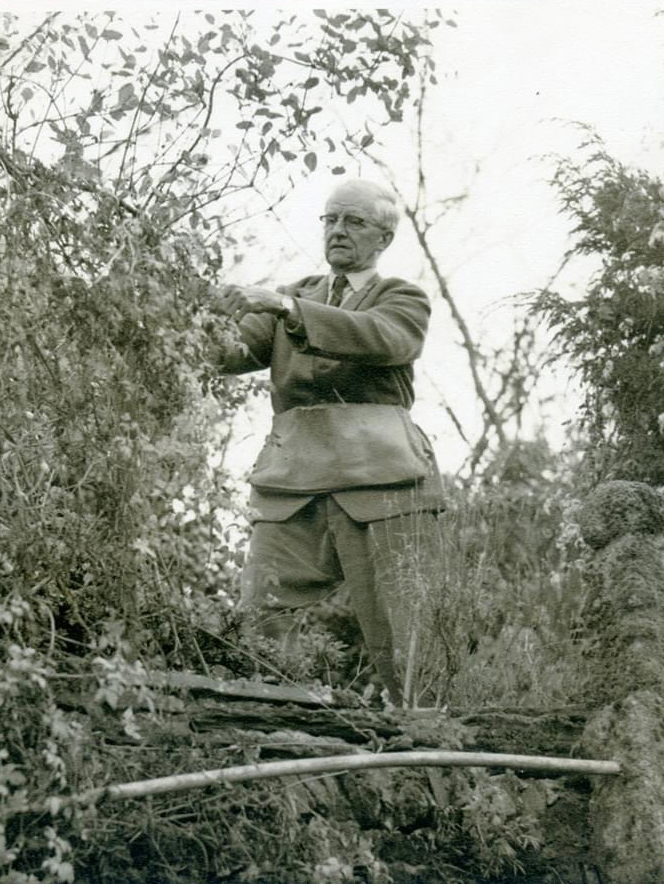
Lionel Stauhope Fortescue (1892–1981).
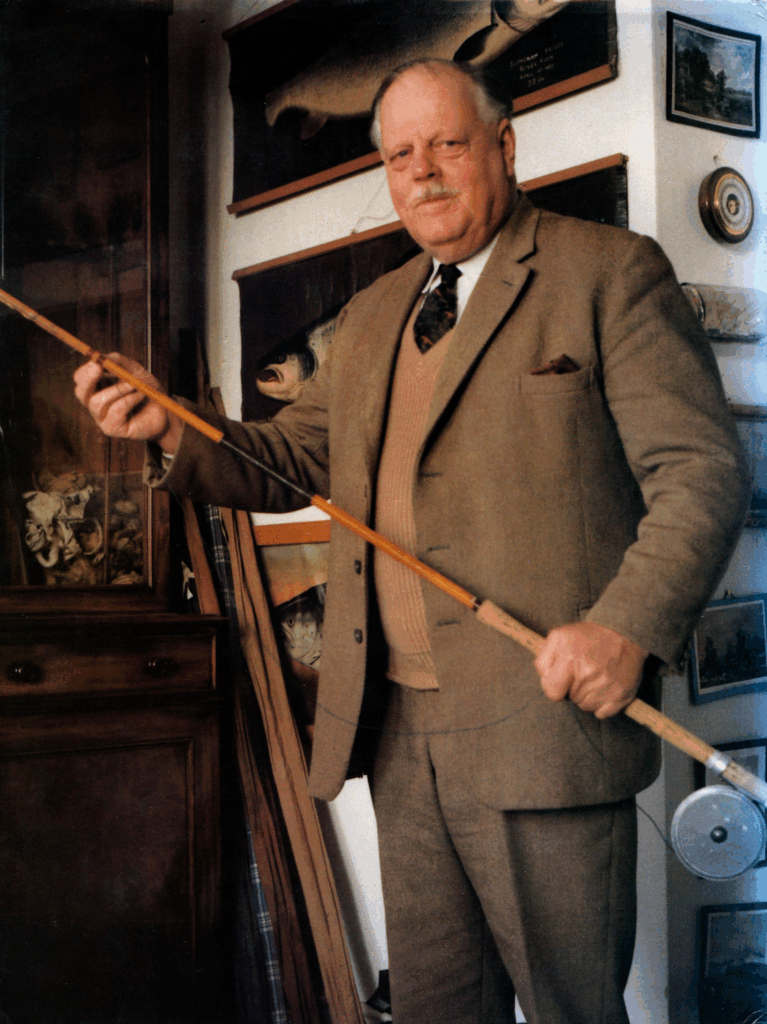
John Ashley–Cooper (1915–1986).
Among the earliest leaseholders was the Englishman Lionel S. Fortescue, who first fished Vatnsdalsá after World War I and was captivated by its beauty and the quality of its salmon. His 1936 lease helped establish the system that remains today, where those entrusted with the river’s care balance conservation with world-class angling.
John Ashley-Cooper, a distinguished British angler and writer, played a significant role in Vatnsdalsá’s history. His passion for salmon fishing led him to secure a lease on the river, and his experiences there became part of his renowned writings on the sport.
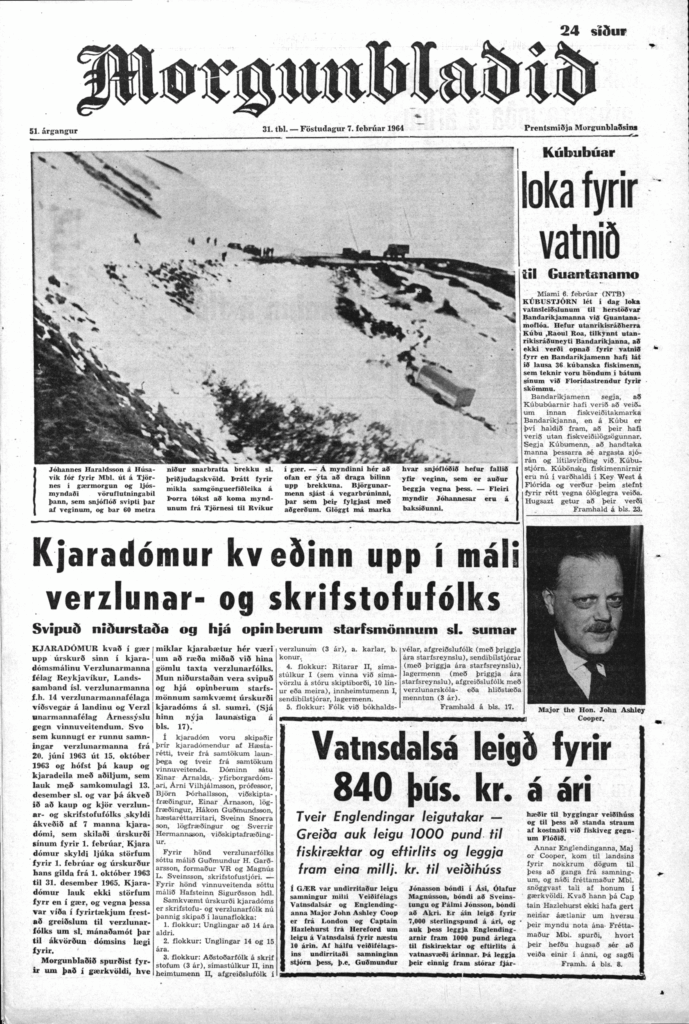
Morgunblaðið 7. February 1964.
Safeguarding the River’s Future
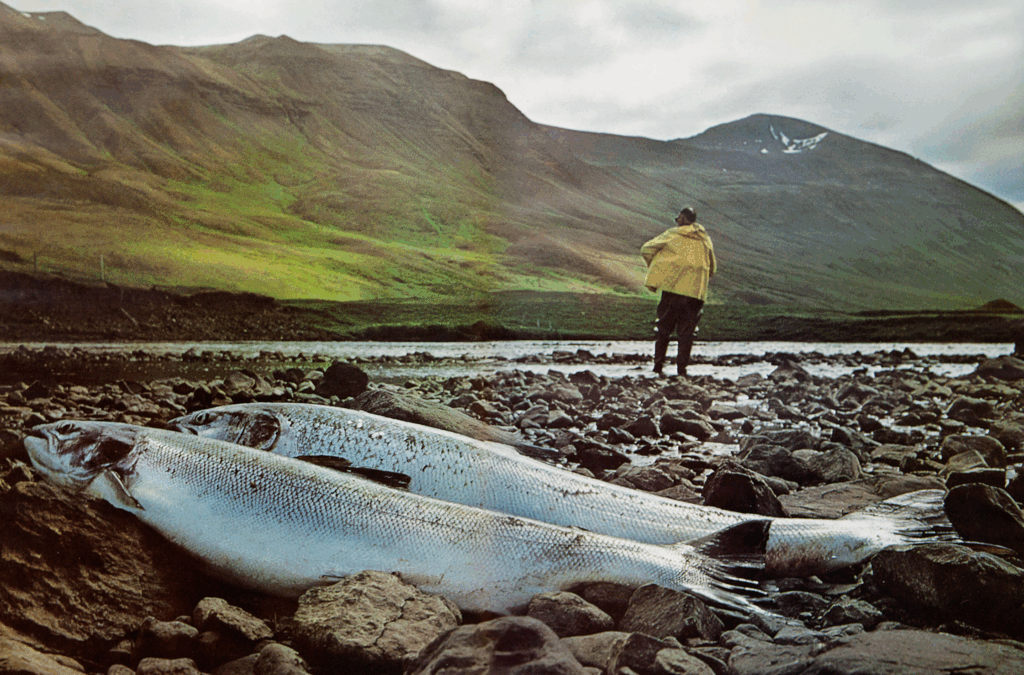
Roderick Haig-Brown (1908–1976) – Hnausastrengur. Photo: Marvin Elliott Newman (1927–2023).
Through the decades, leaseholders have played a crucial role in shaping the management of Vatnsdalsá. While each brought their own vision, the guiding principle has remained the same — to protect the salmon, preserve the river, and ensure its reputation as one of Iceland’s finest salmon waters endures for generations to come.